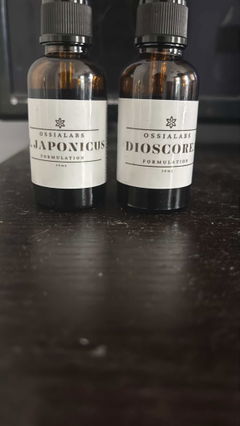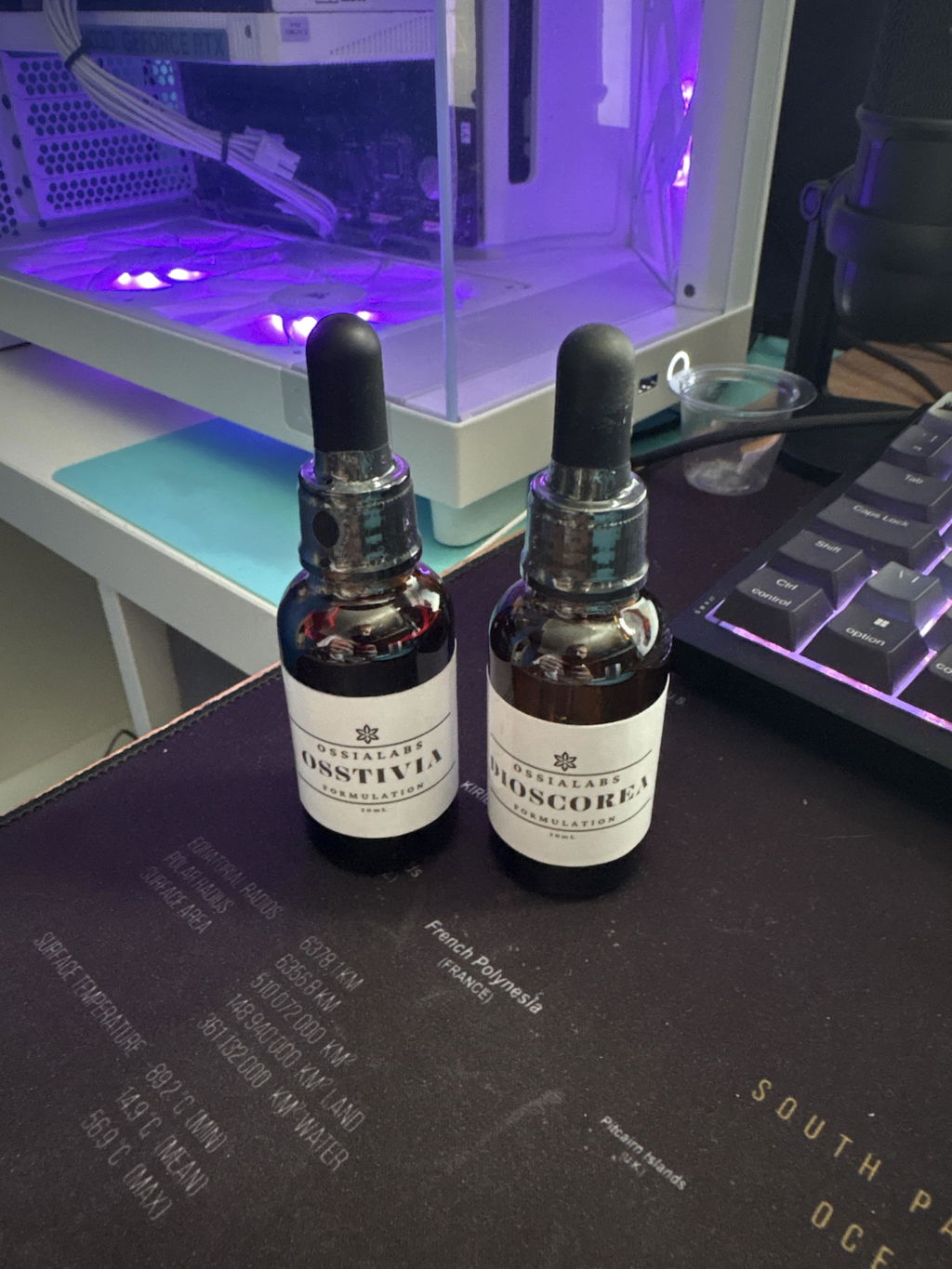
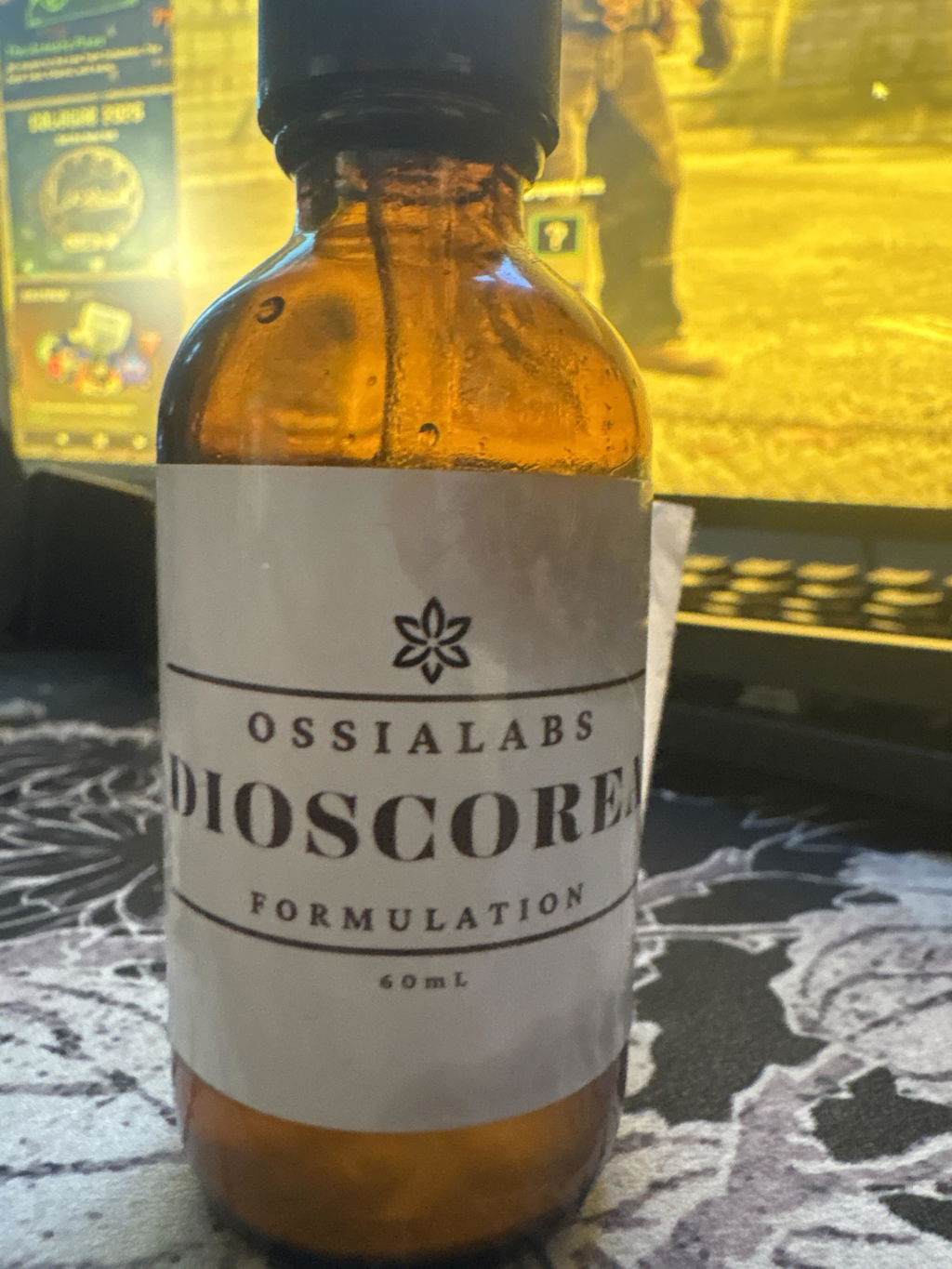
Dioscorea SNEDDS (>95% Diosgenin)
Dioscorea extract and its constituents diosgenin and dioscin have been studied in relation to resistance training outcomes, cognitive measurements, metabolic signaling, and formulation dependent delivery. This page summarizes the standardized extract, SNEDDS formulation, and cited experimental findings.
Certificate of Analysis and Standardization
Certificate of Analysis. Third party testing reports the extract’s standardized diosgenin concentration at greater than 95 percent. The certificate and product specifications below present the measured composition.
View Official Lab COASNEDDS Formulation Research
Dioscin and diosgenin are lipophilic compounds. SNEDDS formulation research evaluates their dispersion, dissolution, permeability, and transport in lipid based delivery systems.
SNEDDS Formulation Measurements. Studies of self nanoemulsifying systems measure droplet formation, dissolution, intestinal transport, first pass exposure, and pharmacokinetic changes for lipophilic botanical compounds.
Nano Emulsification
Upon GI contact, SNEDDS spontaneously forms lipid nano droplets under 200 nm. This dramatically increases the surface area for absorption.
P gp Inhibition
SNEDDS surfactants inhibit P glycoprotein efflux transporters, preventing active efflux of compounds back into the gut lumen.
Lymphatic Bypass
Nano droplets are packaged into chylomicrons absorbed via lymphatic lacteals, bypassing hepatic first pass metabolism.
Systemic Saturation
Active compounds enter circulation at full potency, achieving significantly higher plasma concentrations than conventional oral delivery methods.
SNEDDS Permeation Models


Training and Muscle Research
Diosgenin is a steroidal sapogenin. Structural diagrams compare its steroidal scaffold with related molecules, including DHEA.
Resistance Training Research
Studies show significant improvements in one repetition maximum leg press and bench press outcomes. The cited human study by Horii et al. measured muscle hypertrophy and strength outcomes during resistance training combined with Dioscorea esculenta intake, indicating enhanced training adaptation in athletes.
Cell and Signaling Research
Research indicates Diosgenin protects C2C12 myoblasts from oxidative damage by attenuating mitochondrial ROS generation and regulating the mitochondrial apoptotic pathway. The cited C2C12 study by Kostov et al. measured anabolic pathway markers following exposure to diosgenin and ecdysterone.
Standardized Extract
The certificate of analysis reports a diosgenin concentration greater than 95 percent. The SNEDDS section describes the formulation measurements used to characterize delivery and maximize cellular absorption.
Cognitive and Brain Delivery Research
Neurological Research. Studies of diosgenin report cognitive, biomarker, and neurological pathway measurements across human and experimental models.
Brain Delivery Measurements
A 2025 study by Ahmad et al. evaluated a diosgenin loaded nanoemulsion in an animal model and reported pharmacokinetic measurements demonstrating significantly improved blood brain barrier penetration and brain bioavailability for neuroprotection during cerebral ischemia.
Cognitive Trial Data
The cited placebo controlled human studies by Tohda et al. and Inada et al. measured cognitive performance outcomes and plasma biomarkers following Dioscorea or diosgenin rich yam extract interventions. Findings suggest Diosgenin enhances cognitive function in healthy adults and ameliorates plasma biomarkers in cases of mild cognitive impairment.
Metabolic Pathway Research
Metabolic Signaling
The cited studies examined GLUT 4 signaling, glucose metabolism, insulin sensitivity, and related metabolic endpoints. Dioscorea esculenta is documented to induce an increase in muscle sex steroid hormones associated with enhanced insulin sensitivity.
Measurement and Serving Guide
Measurement Guide. The marked dropper measures the serving in milliliters. The labeled range shown on this page begins at 0.5 mL and extends to 2.0 mL.
How long will your bottle last?
| Daily Dose | 30mL Bottle | 60mL Bottle |
|---|---|---|
| 0.5 mL (Low) | 2 Months | 4 Months |
| 1.0 mL | 1 Month | 2 Months |
| 1.5 mL | 20 Days | 40 Days |
| 2.0 mL (Max) | 2 Weeks | 1 Month |
Note: 10 drops is approximately 0.5 mL. Max recommended dose is 2mL per day.
Scientific References
- Tohda C, Yang X, Matsui M, Inada Y, Kadomoto E, Nakada S, Watari H, Shibahara N. Diosgenin Rich Yam Extract Enhances Cognitive Function: A Placebo Controlled, Randomized, Double Blind, Crossover Study of Healthy Adults. Nutrients. 2017 Oct 24;9(10):1160. doi: 10.3390/nu9101160.
- Inada, Y., Tohda, C., Sasabayashi, D., & Suzuki, M. (2024). Diosgenin rich Yam (rhizome of Dioscorea batatas) extract ameliorates cognitive functions and plasma biomarkers for mild cognitive impairment and mild Alzheimer's disease: A randomized controlled trial. Phytomedicine Plus, 4(3), 100613.
- Ahmad, Niyaz, et al. "Formulation of a novel diosgenin loaded nanoemulsion and its evaluation for improved brain bioavailability in the management of cerebral ischemia." Journal of Drug Delivery Science and Technology, vol. 114, 2025, p. 107468.
- Kostov T, Diel P, Isenmann E. Examination of the anabolic activity and mechanisms of action of the combination of Diosgenin and Ecdysterone in C2C12 myotubes. Toxicol Lett. 2024 Nov;401:181-189. doi: 10.1016/j.toxlet.2024.10.005.
- Horii N, Hasegawa N, Fujie S, Iemitsu K, Uchida M, Hamaoka T, Iemitsu M. Effects of Dioscorea esculenta intake with resistance training on muscle hypertrophy and strength in sprint athletes. J Clin Biochem Nutr. 2020 Nov;67(3):338-343. doi: 10.3164/jcbn.19-124.
- Semwal P, Painuli S, Abu-Izneid T, Rauf A, Sharma A, Daştan SD, Kumar M, Alshehri MM, Taheri Y, Das R, Mitra S, Emran TB, Sharifi-Rad J, Calina D, Cho WC. Diosgenin: An Updated Pharmacological Review and Therapeutic Perspectives. Oxid Med Cell Longev. 2022 May 29;2022:1035441.
- ur Rehman, R., et al. "Diosgenin: A Potential Therapeutic Phytocompound for the Management of Atherosclerosis and Other Physiological Disorders." Natural Product Communications, 2024.
- Wang Z, Zhao S, Tao S, Hou G, Zhao F, Tan S, Meng Q. Dioscorea spp.: Bioactive Compounds and Potential for the Treatment of Inflammatory and Metabolic Diseases. Molecules. 2023 Mar 22;28(6):2878.
- Mohseni Moghaddam P, Khanmohammadi M, Roghani M. Literature review on hepatoprotective effects of diosgenin: possible mechanisms of action. Front Pharmacol. 2023 Sep 12;14:1226548.
- Biswas, Soumili, et al. "Exploring the therapeutic potential of dioscin and diosgenin in neurological disorders." Brain Behavior and Immunity Integrative, vol. 7, 2024, p. 100069.
- Sato et al. Dioscorea esculenta induced increase in muscle sex steroid hormones is associated with enhanced insulin sensitivity in a type 2 diabetes rat model. FASEB Journal. (2017).
- Poole et al. Chronic application and significant increase in 1RM leg press and 1RM bench press during strength training. (2010).
- Ikeuchi et al. (2006); Goh et al. (2020); Herrick et al. (2020). Improvements in endurance capacity in animal models and human interventions.
© Ossialabs Advanced research backed formulations.
Statements have not been evaluated by the FDA. Not intended to diagnose, treat, cure, or prevent any disease.